Introduction
Mini excavators have become an important equipment category for many construction, landscaping, agricultural, and property maintenance applications.
Their compact size makes them relevant to businesses serving customers who need machinery for smaller projects and restricted work areas.
For entrepreneurs and existing machinery businesses, starting a mini excavator dealership may provide an opportunity to expand into the compact construction equipment market.
However, building a successful dealership requires more than purchasing machines and listing them for sale.
A sustainable business also needs a suitable manufacturer, local customers, inventory planning, marketing, and after-sales support.
1. Why Consider a Mini Excavator Dealership?
Mini excavators serve several customer groups.
These include:
- Construction contractors
- Landscaping businesses
- Agricultural operators
- Equipment rental companies
- Property maintenance businesses
- Utility contractors
This range of applications gives dealers opportunities to approach customers across different industries.
Instead of relying on a single customer segment, a dealership can develop multiple sales channels.
2. Who Should Consider Starting This Business?
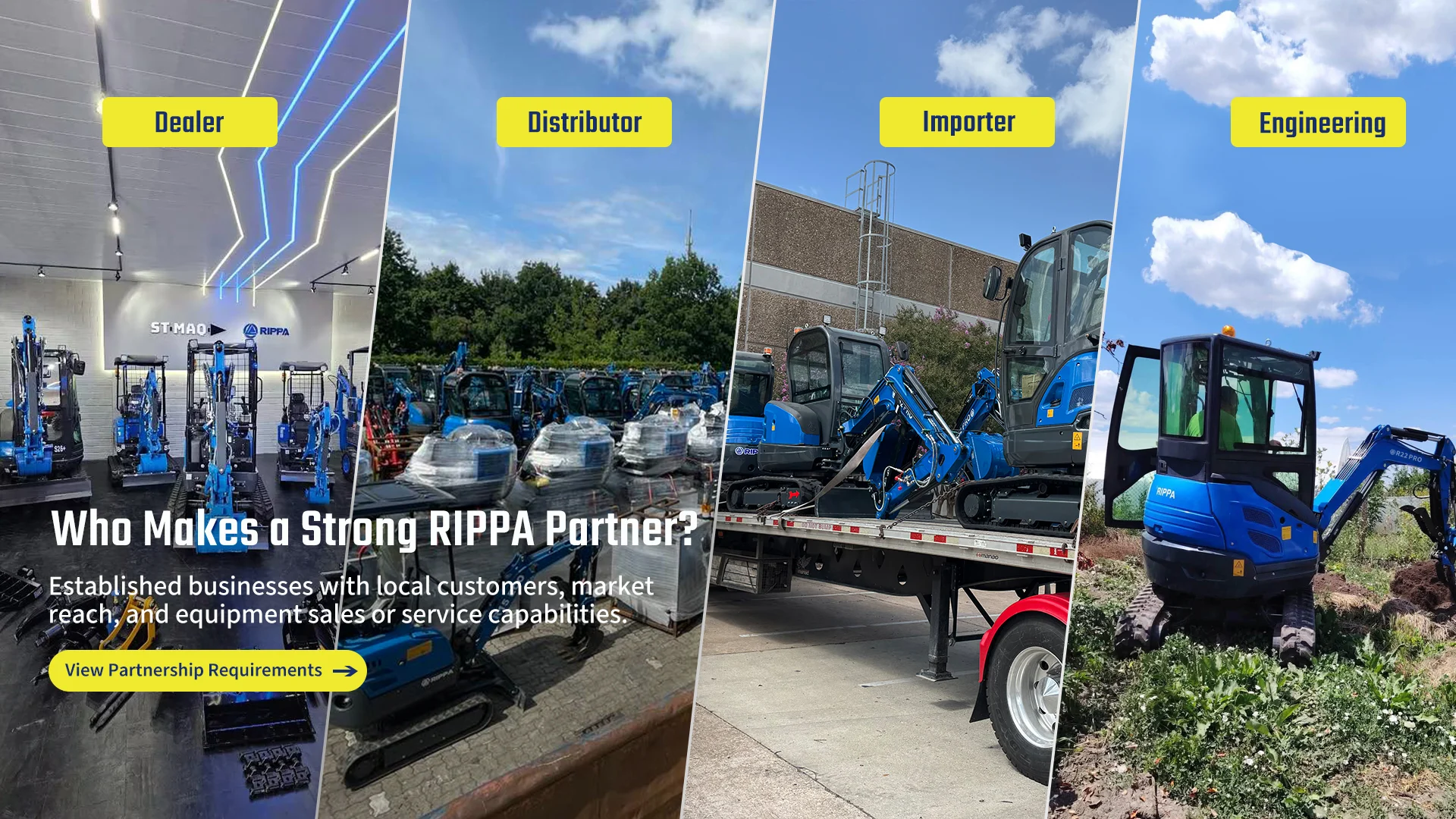
An excavator dealership may be worth evaluating for:
Existing Machinery Dealers: Add another compact machinery product line.
Tractor Dealers: Reach customers involved in agricultural and property maintenance work.
Rental Companies: Combine equipment rental with machinery sales.
Trailer Businesses: Serve existing equipment customers with additional machinery options.
Used Machinery Dealers: Complement used equipment sales with new machines.
Machinery Importers: Establish direct purchasing relationships with manufacturers.
3. Choose the Right Mini Excavator Manufacturer
The manufacturer directly affects the dealership’s product supply and long-term business relationship.
Before selecting a supplier, evaluate:
- Product range
- Manufacturing information
- Machine specifications
- Quality documentation
- Spare parts arrangements
- Warranty procedures
- Technical support
- Dealer cooperation terms
Request current catalogs and quotations.
A factory visit can also help you understand the manufacturing operation.
4. Decide Which Excavator Models to Stock
A new dealer should not automatically stock every available model.
Start by understanding local demand.
For example:
| Customer Type | Product Selection Considerations |
|---|---|
| Landscapers | Compact dimensions and suitable attachments |
| Construction Contractors | Digging capability and machine specifications |
| Rental Companies | Versatility and maintenance support |
| Agricultural Businesses | Property maintenance applications |
| Equipment Importers | Market demand and commercial configuration |
The right inventory depends on local customer requirements and the manufacturer’s available models.
5. Build a Professional Dealership
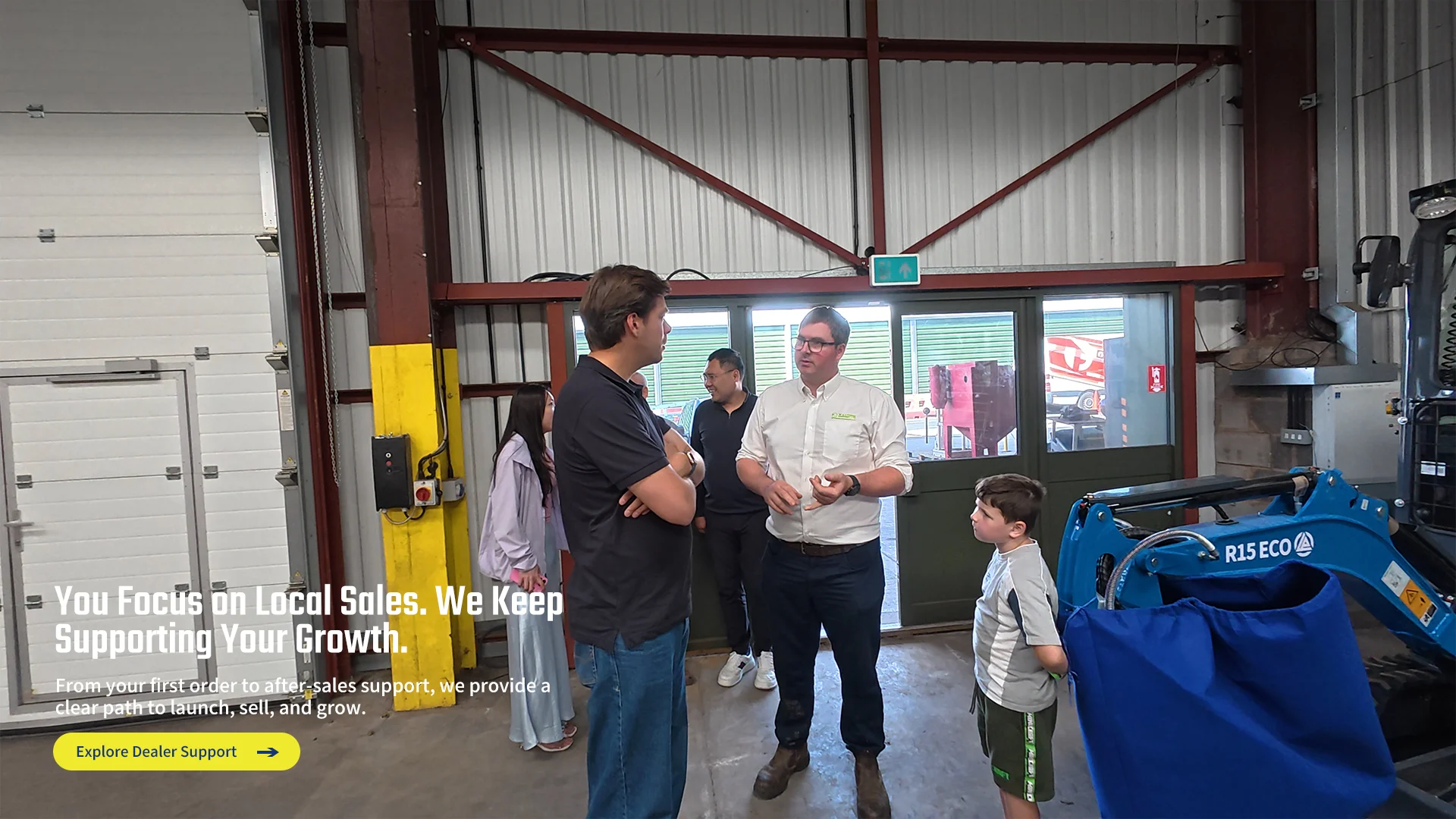
A dealership can operate through several business models.
Physical Showroom
Display machines and provide customers with opportunities to inspect equipment.
Warehouse-Based Business
Maintain inventory and arrange equipment collection or delivery.
Sales and Service Operation
Combine equipment sales with parts, maintenance, and technical support.
Regional Distribution
Develop relationships with local resellers and customers across a wider territory.
Not every business needs to begin with a large facility.
However, the operating model should match the dealership’s goals and available resources.
6. Why Should Dealers Offer Attachments and Parts?
Attachments and replacement parts can complement machine sales.
They may help dealers serve customers who need additional equipment applications and ongoing maintenance support.
Potential product categories include:
- Buckets
- Hydraulic attachments
- Grapples
- Augers
- Replacement tracks
- Filters
- Common service components
Exact compatibility should always be checked against the machine model.
7. How Can a New Dealership Generate Sales?
A practical marketing strategy should combine online and local activities.
Consider:
- A professional business website
- Product listings
- Google Business Profile where applicable
- Social media demonstrations
- Local equipment events
- Contractor networking
- Customer referrals
- Rental demonstrations
Use real product photographs, equipment displays, and customer delivery images to build trust.
8. Why Consider RIPPA?
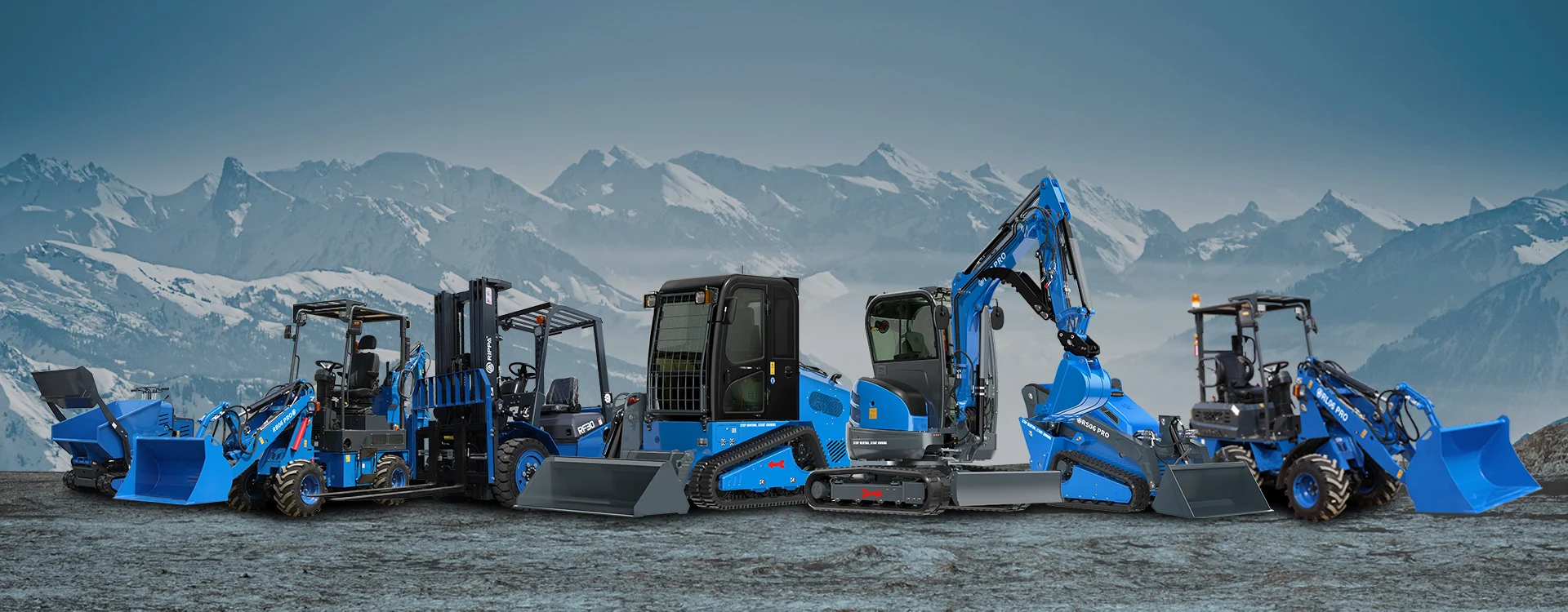
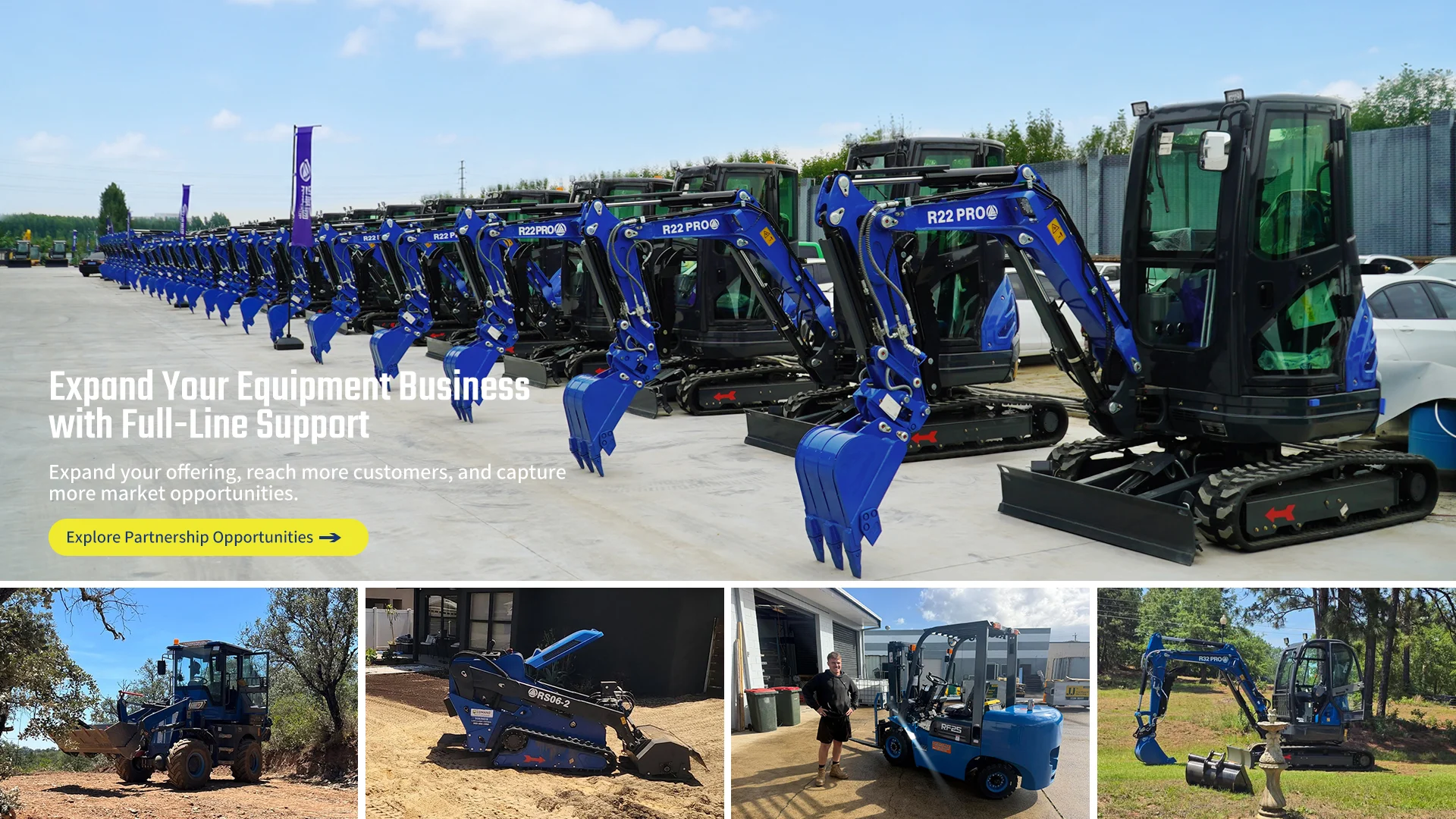
RIPPA manufactures compact construction equipment, including mini excavators and other machinery categories.
Businesses interested in becoming dealers can explore opportunities involving:
- Mini excavator sales
- Skid steer loader sales
- Wheel loader distribution
- Forklift sales
- Attachments and parts
The actual product range and commercial arrangements should be confirmed with RIPPA’s current sales team.
9. How Do You Apply for a Dealership?
Prepare your company profile, website, business location, product experience, target customers, and expected purchasing plans.
Then contact RIPPA to discuss:
- Territory availability
- Product range
- Dealer pricing
- Initial inventory
- Parts arrangements
- Training
- Warranty responsibilities
- Marketing support
Do not assume that every benefit is automatically included. Confirm the agreed conditions in writing.
Frequently Asked Questions
Is a mini excavator dealership suitable for an existing machinery business?
It may be suitable if the business has relevant customers, sales resources, and the ability to support machinery products.
Can I start with only mini excavators?
Yes. A focused product range may be a practical starting point, depending on the dealer agreement and market requirements.
Can rental companies sell mini excavators?
Yes. Rental companies can evaluate adding machinery sales to their existing operations.
Do I need a physical showroom?
Not every business model requires a traditional showroom. Storage, customer access, demonstrations, and local service arrangements should be considered.
How can I become a RIPPA mini excavator dealer?
Submit a business inquiry through RIPPA’s official website and discuss your company profile, location, product interests, and dealership requirements.
Conclusion
Starting a mini excavator dealership can be a practical business expansion opportunity for companies already serving construction, agriculture, landscaping, or equipment rental customers.
The key is to choose a suitable manufacturer, select products according to local demand, and develop a professional sales and support operation.
RIPPA welcomes qualified businesses interested in exploring compact equipment distribution.
If you already have customers and resources in the machinery industry, consider expanding your business through a RIPPA dealership partnership.
 Home
 Products
 Email
 WhatsApp