Introduction
The construction equipment industry offers business opportunities for companies interested in machinery sales, wholesale supply, and regional distribution.
As construction, agriculture, landscaping, and material handling businesses require different types of machinery, equipment distributors play an important role in connecting manufacturers with local customers.
For entrepreneurs and established business owners, starting an equipment distribution business can provide an opportunity to develop a new revenue channel and expand an existing machinery business.
However, successful distribution requires more than purchasing equipment from a manufacturer and reselling it.
A sustainable machinery distribution business needs a suitable supplier, an understanding of local demand, reliable inventory planning, customer acquisition, and an effective delivery and support system.
This guide explains how to evaluate equipment distributor business opportunities and build a regional machinery business.
1. What Is an Equipment Distribution Business?
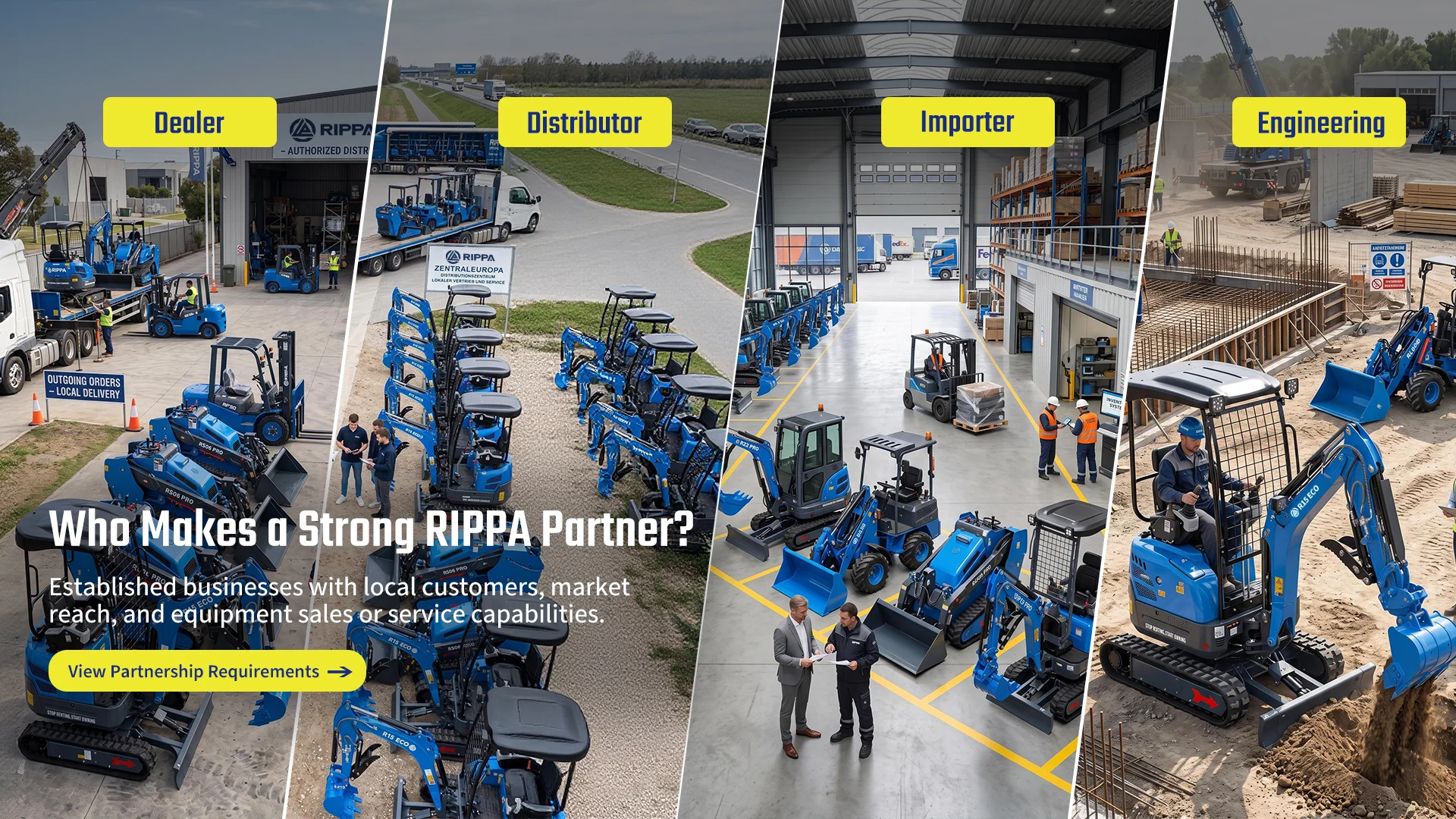
An equipment distributor purchases machinery from manufacturers or authorized suppliers and develops sales channels within a specific market.
Depending on the business arrangement, distributors may serve:
- Construction contractors
- Equipment rental companies
- Agricultural businesses
- Landscaping companies
- Local machinery dealers
- Industrial equipment buyers
- Regional resellers
A distributor may sell directly to end customers, supply smaller dealers, or operate both channels.
The exact business model depends on the manufacturer’s agreement and the distributor’s local market strategy.
2. Why Is Construction Equipment Distribution an Opportunity?
Construction equipment serves multiple industries.
This creates opportunities for distributors to develop different customer segments.
Construction Industry
Contractors need machinery for excavation, material handling, site preparation, and other construction activities.
Landscaping Industry
Landscaping companies may require compact equipment for property improvements, grading, and outdoor projects.
Agricultural Industry
Farm businesses use machinery for property maintenance, drainage, material handling, and land management.
Equipment Rental Industry
Rental companies purchase machinery to expand their equipment fleets and serve local contractors.
For distributors, these industries provide different potential customer groups rather than relying on a single market segment.
3. Which Machinery Products Can an Equipment Distributor Sell?
Product selection should match the needs of the local market.
A compact construction equipment distribution business may include:
| Product Category | Potential Customers |
|---|---|
| Mini Excavators | Contractors, landscapers, farmers |
| Skid Steer Loaders | Construction companies, rental businesses |
| Wheel Loaders | Construction and material handling businesses |
| Forklifts | Warehouses and industrial customers |
| Attachments | Existing machinery owners and equipment dealers |
A distributor does not need to introduce every category immediately.
Starting with a focused product portfolio may make inventory management and customer development easier.
4. How to Find Reliable Equipment Manufacturers
Choosing a manufacturing partner is one of the most important decisions in equipment distribution.
Before establishing a relationship, evaluate:
Manufacturing Capabilities: Understand the manufacturer’s production facilities and product categories.
Product Documentation: Request technical specifications, catalogs, and applicable compliance documents.
Supply Reliability: Discuss production capacity, order processing, availability, and delivery arrangements.
Commercial Terms: Review wholesale quotations, payment conditions, and purchasing requirements.
After-Sales Support: Understand parts availability, warranty procedures, and technical assistance.
Dealer Cooperation: Clarify territory arrangements and distribution responsibilities.
A long-term relationship should be based on transparent commercial conditions rather than purchase price alone.
5. How to Build Your Regional Customer Network
A distributor needs a clear customer acquisition strategy.
Start by identifying businesses that already purchase or use machinery.
Potential customers include:
- Local construction contractors
- Excavation companies
- Agricultural machinery dealers
- Landscaping equipment suppliers
- Equipment rental businesses
- Industrial equipment distributors
Build a customer database and organize it according to industry, location, purchasing interest, and business size.
Local industry events, direct business outreach, product demonstrations, and online marketing can help develop new customer relationships.
6. Warehouse and Inventory Planning
A regional distributor should evaluate its storage and inventory capabilities.
Important considerations include:
- Available warehouse space
- Equipment display areas
- Loading and unloading arrangements
- Machine storage
- Parts inventory
- Delivery coordination
Inventory planning should reflect actual market demand.
Before placing a large order, evaluate customer inquiries, competitor products, available capital, and expected sales cycles.
Some businesses may begin with selected demonstration machines and expand their inventory as their customer network develops.
7. How Can Distributors Develop Multiple Sales Channels?
A regional machinery distributor can develop several complementary sales channels.
Direct Sales
Sell machinery directly to contractors, farms, and commercial customers.
Dealer Networks
Supply smaller machinery businesses that want to sell products locally.
Rental Partnerships
Develop relationships with equipment rental companies that purchase machinery for their fleets.
Wholesale Supply
Provide machinery to businesses interested in reselling equipment in their own markets.
These channels can be developed gradually according to business resources and manufacturer arrangements.
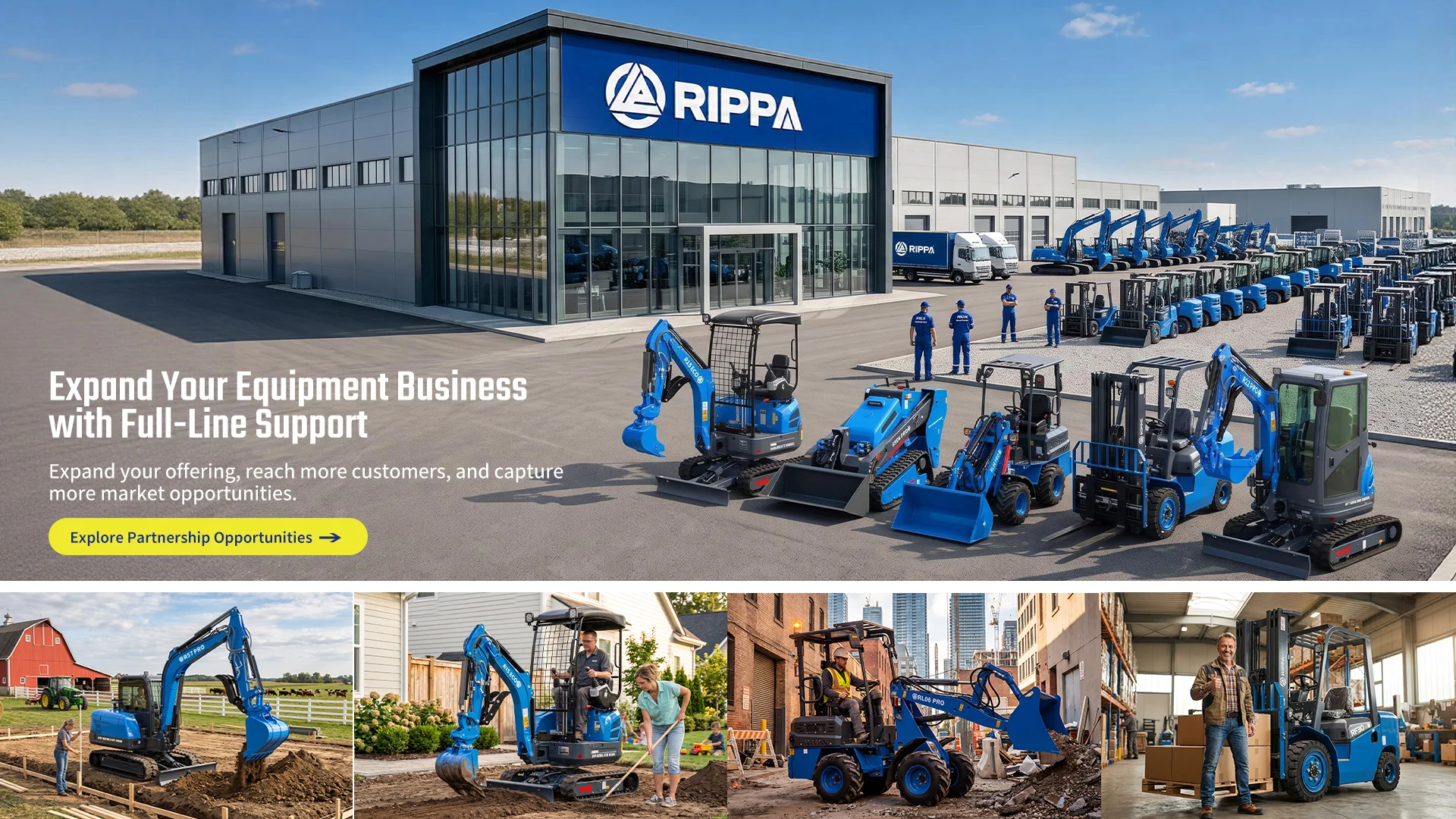
8. Why Consider RIPPA as a Machinery Manufacturing Partner?
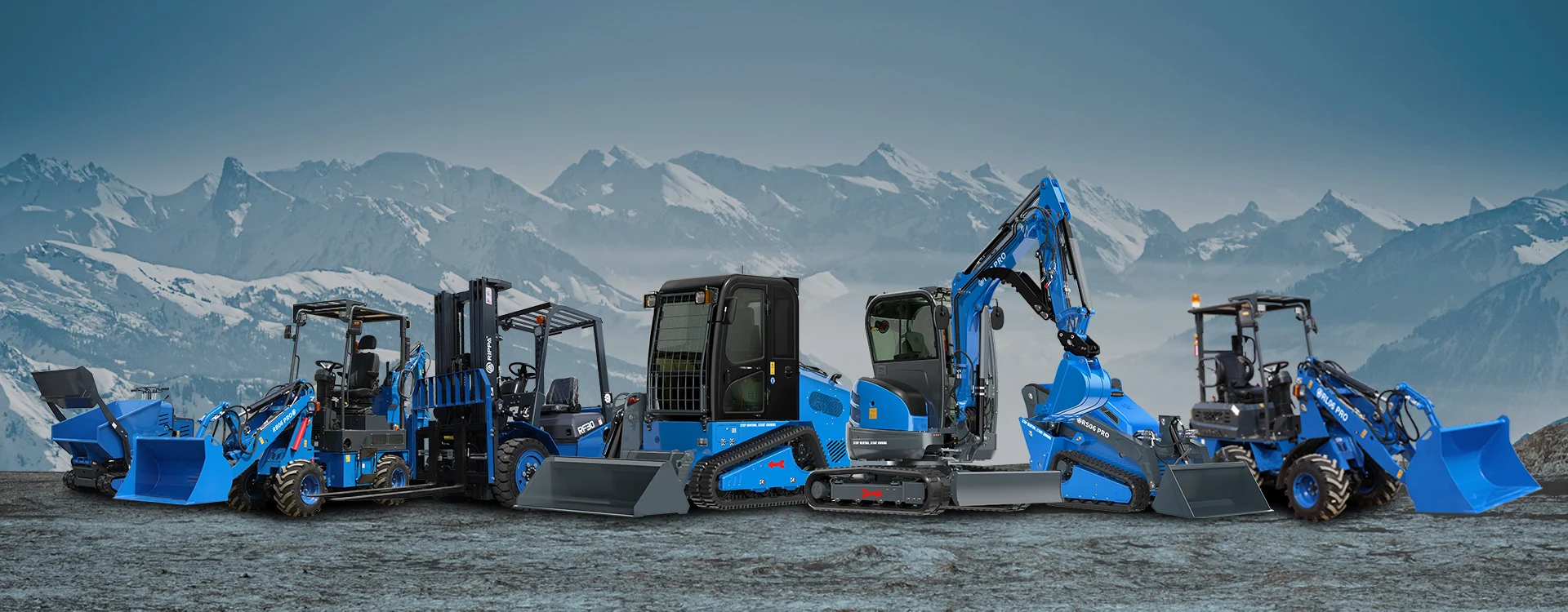
RIPPA is a construction machinery manufacturer offering compact equipment categories that include:
- Mini excavators
- Skid steer loaders
- Wheel loaders
- Attachments
Its compact equipment range includes mini excavator models in the 1.5–6 ton category, according to current company sales materials.
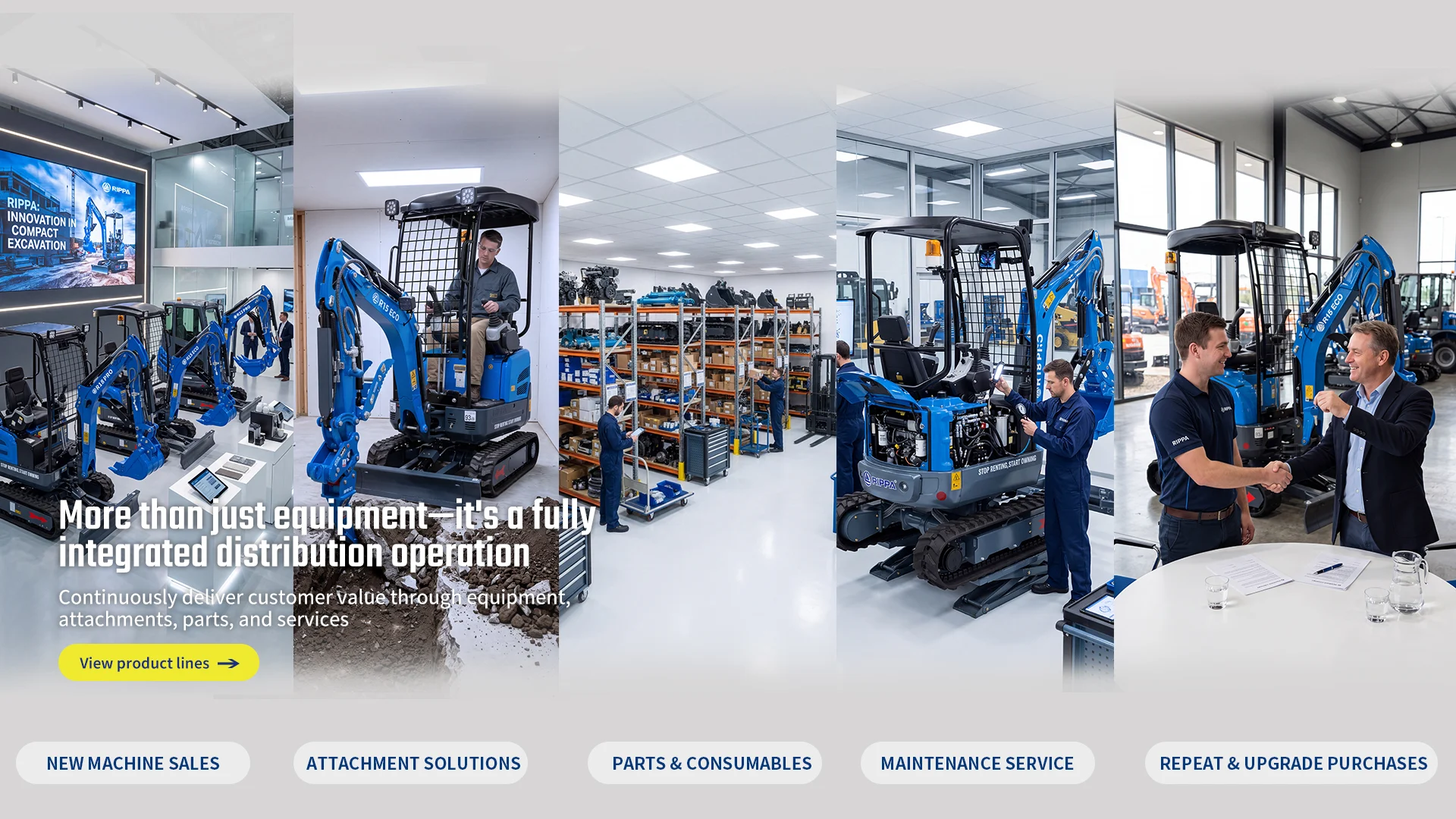
For machinery businesses interested in developing a regional distribution network, these product categories provide an opportunity to evaluate different equipment segments through one potential manufacturing relationship.
Potential cooperation discussions can cover:
- Factory-direct purchasing
- Product selection
- Wholesale quotations
- Initial inventory
- Regional distribution
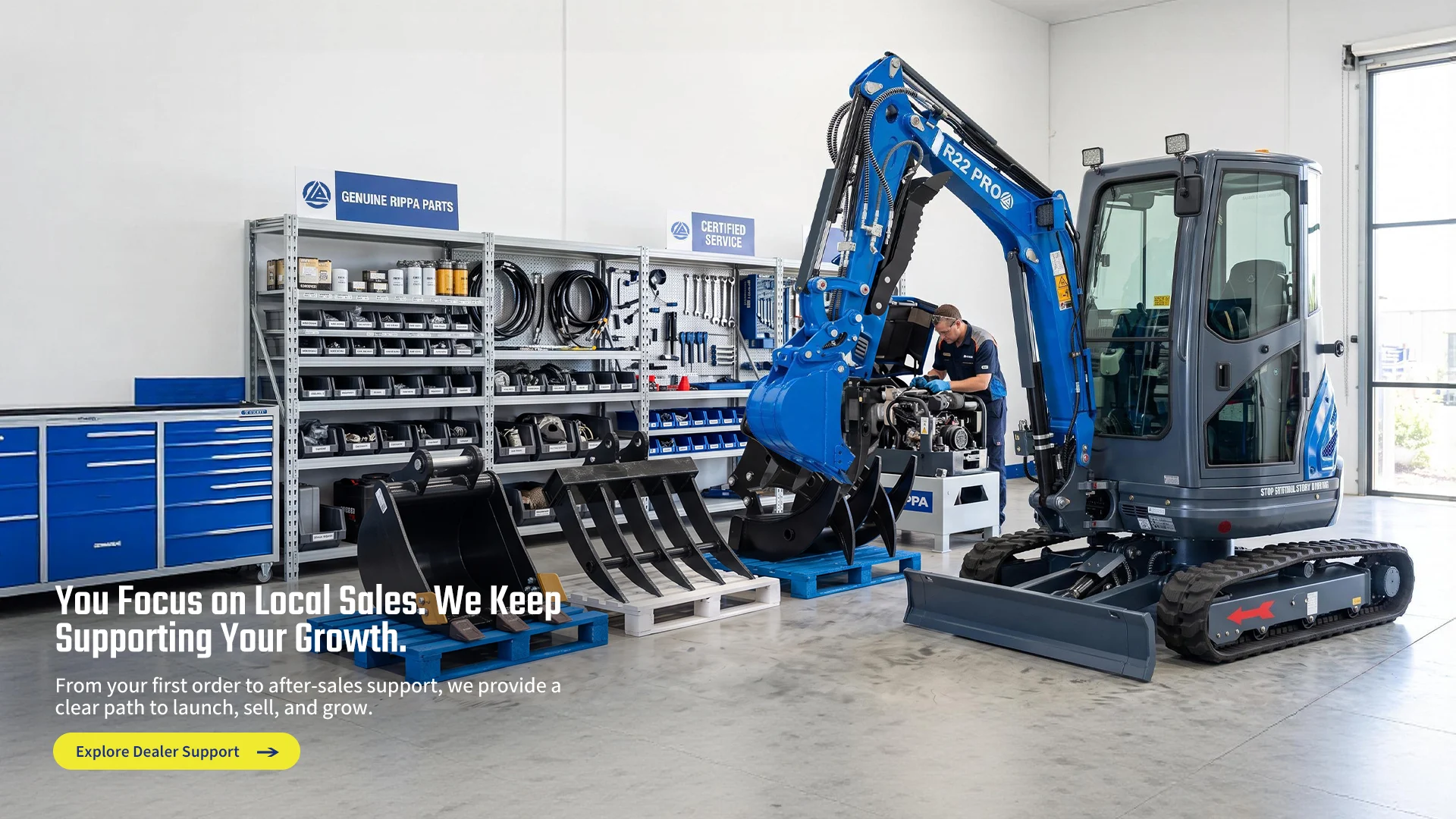
- Parts arrangements
- Technical support
Specific dealer eligibility, purchasing conditions, and regional arrangements should be confirmed directly with RIPPA.
9. What Resources Does a Regional Equipment Distributor Need?
Before starting, evaluate whether your business has access to:
- Sufficient working capital.
- A suitable business location.
- Equipment storage facilities.
- Sales and marketing personnel.
- Local customer relationships.
- Transportation arrangements.
- Parts and service resources.
- A reliable manufacturing partner.
Not every resource must necessarily be owned directly by the distributor. Some services can be developed through qualified local partners.
10. How to Start Building an Equipment Distribution Business
A practical starting process includes:
Step 1: Research Your Market
Identify local construction, agricultural, rental, and machinery customers.
Step 2: Select Your Product Categories
Choose machinery that fits customer demand.
Step 3: Evaluate Manufacturers
Compare manufacturing capabilities, product information, commercial terms, and support.
Step 4: Develop a Distribution Plan
Define your customer groups, sales channels, inventory strategy, and target territory.
Step 5: Establish Cooperation
Discuss pricing, purchasing conditions, delivery, parts, and dealer responsibilities.
Step 6: Develop Your Local Brand
Use professional product displays, digital marketing, customer demonstrations, and business networking.
Frequently Asked Questions
Is equipment distribution a good business opportunity?
It can be an opportunity for businesses with access to machinery customers, suitable capital, and reliable supplier relationships. Results depend on local demand and business execution.
What is the difference between an equipment dealer and a distributor?
A dealer typically sells machinery to local end customers, while a distributor may supply multiple dealers or manage a wider territory. Actual responsibilities depend on the commercial agreement.
Can a small business become an equipment distributor?
Potentially. The manufacturer will evaluate the business’s resources, market knowledge, sales channels, and proposed purchasing plans.
Can an equipment distributor sell multiple machinery categories?
Yes, when the manufacturer offers the products and the distribution agreement permits the relevant categories.
How can I become a RIPPA distributor?
Prepare your company profile, location, existing business activities, target customers, and product interests. Then contact RIPPA to discuss distribution opportunities.
Conclusion
Equipment distribution offers an opportunity for entrepreneurs and established machinery businesses to develop regional sales networks and serve multiple industries.
The key elements include a suitable manufacturing partner, carefully selected products, reliable inventory planning, and a strong local customer network.
RIPPA offers compact construction equipment categories that potential international partners can evaluate for their markets.
If you have the resources and ambition to develop a machinery distribution business, explore a potential partnership with RIPPA and build your regional equipment market.
 Home
 Products
 Email
 WhatsApp